

Getting a letter that says your insurance company won’t cover a treatment your doctor recommended can feel like a gut punch, especially when you’re already dealing with a health problem. Many people assume a denial is final, but insurance denials are often just the first step in a longer process that consumers can influence. Understanding why claims get denied, what your rights are under state and federal law, and how to build a strong appeal can mean the difference between paying out of pocket and getting the care you need. This guide walks through the practical steps to take when coverage is denied, so you can respond with confidence instead of panic.
Common Reasons Insurers Deny Medical Claims
Insurance companies deny claims for a variety of reasons, and knowing the specific reason behind your denial is the first step toward fixing it. Sometimes the issue is as simple as a coding error or missing paperwork, while other times the insurer argues the treatment was not medically necessary. Denials can also happen when a provider is out of network, when prior authorization wasn’t obtained, or when the insurer considers a treatment experimental.
Reading the explanation of benefits carefully will usually reveal the exact denial code and reasoning. This information is critical because your appeal strategy will differ depending on whether the issue is administrative or based on medical judgment.
- Lack of prior authorization before treatment
- Treatment classified as not medically necessary
- Out-of-network provider or facility
- Missing or incorrect billing codes
- Treatment deemed experimental or investigational
Review Your Policy Documents Thoroughly
Before you can challenge a denial, you need to know exactly what your policy promises to cover. Pull out your summary of benefits and coverage, along with the full policy document, and look specifically at the sections on exclusions, limitations, and medical necessity definitions. Insurance contracts are legally binding documents, and the specific language often determines whether an appeal will succeed. Pay close attention to how your policy defines “medically necessary,” since insurers frequently deny claims by arguing a treatment doesn’t meet this standard even when your doctor disagrees. Check whether prior authorization was required for the treatment and, if so, whether it was obtained before services were rendered. Also note any step therapy requirements, which mandate trying cheaper treatments first before a more expensive one gets approved. Compare the denial letter against the actual policy language line by line. Insurers sometimes cite exclusions that don’t actually apply to your specific diagnosis or treatment code, or misapply a clause meant for a different category of care. If your plan is employer-sponsored, request the Summary Plan Description (SPD) as well, since it may contain more detailed terms than the shorter benefits summary. Keep a dated copy of every document version you review, since insurers occasionally update policy language mid-year, and the version in effect at the time treatment was recommended is the one that matters for your appeal.
Start by locating the “Definitions” and “Emergency Services” sections of your policy, since these spell out exactly how your insurer distinguishes urgent care from routine treatment. Pay close attention to any language about “prudent layperson” standards, which is the legal test many plans use to determine whether a reasonable person would have believed their symptoms constituted an emergency. If you were treated in an emergency room and later received a denial, your policy may actually guarantee coverage under federal law regardless of network status. The No Surprises Act, which took effect in 2022, specifically protects patients from certain out-of-network emergency bills, so a denial in this situation is worth confirming directly with your insurer or a patient advocate. While reviewing, also check the policy’s coverage limits, pre-authorization requirements, and any exclusions tied to specific diagnoses or procedures. Make note of deadlines for filing appeals, since many plans only allow 30 to 180 days from the denial date to contest a decision. Keep a copy of the full policy, not just the summary of benefits, since the fine print often contains the details that matter most in a dispute.
Understand Your Right to a Formal Appeal
Every health insurance plan is required to offer an internal appeals process, and in most cases you have the right to request an external review if the internal appeal fails. Federal law under the Affordable Care Act guarantees this right for most plans, and many states have additional consumer protections layered on top. The key is acting quickly, since appeal deadlines are often tied to the date on the denial letter.
An effective appeal usually includes a letter from your treating physician explaining why the treatment is medically necessary, along with any supporting clinical research. It also helps to reference the specific policy language that supports your claim, rather than making a general argument about fairness.
- Request the denial in writing with the specific reason code
- File an internal appeal within the deadline stated in your policy
- Gather supporting documentation from your doctor
- Request an independent external review if the internal appeal is denied
- Keep copies of every letter, email, and phone call record
Know What Happens With Specialized or Newer Treatments
Insurers are often more skeptical of treatments that fall outside conventional protocols, even when physicians consider them legitimate and effective. Anything labeled “newer,” “alternative,” or “investigational” tends to draw extra scrutiny, regardless of how much evidence supports it. Cold laser therapy, for example, is sometimes denied because insurers classify it as experimental, even though it is widely used for pain management and tissue healing. The same pattern shows up with other treatments that sit outside mainstream protocols, including certain regenerative therapies, newer diagnostic imaging techniques, or off-label uses of approved medications. Insurers frequently rely on outdated policy language or internal coverage criteria that haven’t caught up with current medical practice. A treatment can be backed by years of peer-reviewed research and still get flagged simply because it’s not yet listed as “standard of care” in the insurer’s own guidelines. When this happens, patients should ask their provider for documentation showing clinical studies and outcomes that support the treatment’s effectiveness. This might include peer-reviewed journal articles, data from clinical trials, or statements from medical specialty associations endorsing the treatment for specific conditions. It’s also worth asking the provider to cite how many patients they’ve treated with the therapy and what results they’ve seen, since real-world outcomes can strengthen an appeal. Keep in mind that evidence requirements can vary significantly between insurers, so what gets approved by one plan might be denied by another for the exact same treatment. Requesting the insurer’s specific medical policy on the treatment in question can clarify exactly what proof they require, saving time during the appeals process.
Newer or specialized treatments often get flagged automatically, regardless of whether solid evidence supports them. Insurers frequently rely on outdated policy guidelines that haven’t caught up with emerging procedures, which means a denial may say more about the insurer’s paperwork than the treatment’s actual effectiveness. This is especially common with regenerative medicine, where research is evolving faster than coverage policies. Regenerative treatments can face this kind of scrutiny. A procedure like the pshot, used in certain regenerative and sexual health treatments, may be denied simply because it is newer or less common, not because it lacks medical merit. Insurers may also classify such treatments as “experimental” even when published studies and clinical experience suggest otherwise. In these cases, a detailed letter of medical necessity from the prescribing physician can be the deciding factor in an appeal. The strongest letters typically include the patient’s diagnosis, prior treatments attempted and why they failed, relevant clinical studies, and a clear explanation of why this specific procedure is medically appropriate. Including citations from peer-reviewed journals or statements from medical societies can further strengthen the case, since it shows the treatment isn’t just a personal preference but a recognized clinical option.
Navigate Denials for Long-Term or Facility-Based Care
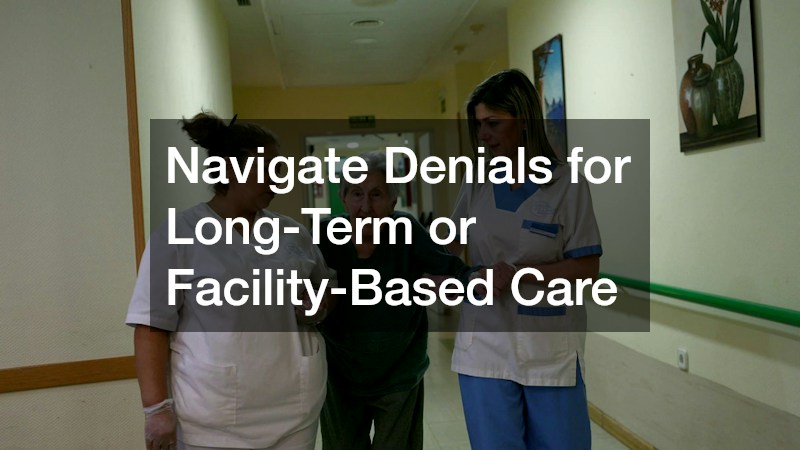
Some of the most stressful denials happen when a patient needs ongoing care in a facility setting rather than a quick outpatient procedure. This includes skilled nursing facilities, inpatient rehabilitation centers, long-term acute care hospitals, and extended hospital stays. Because these services are expensive and open-ended, insurers scrutinize them more closely than they do routine office visits or short procedures. Insurers may argue that a patient no longer needs inpatient-level care, even when a doctor recommends continued monitoring or support. A common tactic is reclassifying a stay from “inpatient” to “observation status,” which can drastically change what’s covered and how much the patient owes out of pocket. This is especially common in situations involving recovery after surgery, chronic illness management, or extended rehabilitation, where progress is gradual and harder to measure with a single data point. These denials often hinge on specific coverage criteria, such as whether a patient still requires daily skilled nursing, physical therapy of a certain intensity, or close physician oversight. Insurers typically review cases at set intervals — every few days or weekly — and can terminate coverage the moment they decide the patient has “plateaued,” even if the treating team disagrees. Patients and families should request the specific clinical criteria the insurer used to make that determination, since this information is often available but rarely offered upfront. It’s also worth knowing that facilities are required to issue written notices, such as a Notice of Medicare Non-Coverage, before discharge-related coverage ends. These notices come with tight appeal windows, sometimes as short as 24 to 48 hours, so acting quickly and keeping the treating physician’s documentation ready can make the difference between a successful appeal and an unwanted discharge.
Families sometimes find themselves negotiating with insurers over coverage for medical beds and other home healthcare equipment needed for safe recovery outside a hospital. These denials are common because insurers often classify such equipment as “convenience items” rather than medical necessities, even when a patient’s safety depends on them. If a denial affects durable medical equipment, request a letter from your physician explaining the specific functional need, since generic requests are denied more often than those backed by detailed clinical justification. The letter should address why a standard bed, wheelchair, or mobility device is inadequate — for example, noting a patient’s risk of falls, need for specific positioning due to respiratory issues, or inability to transfer safely without powered assistance. It also helps to gather supporting documentation beyond the physician’s letter, such as physical therapy notes, home safety assessments, or hospital discharge instructions that reference the equipment by name. Insurers frequently approve appeals when the paperwork ties the equipment directly to a documented diagnosis code and a clear description of the consequences of going without it, such as increased hospital readmission risk. Finally, check whether your plan requires equipment to come from an in-network supplier, since using an out-of-network vendor is a frequent and avoidable reason for denial. If timing is urgent, ask your care team about rental options while the appeal is pending, so recovery isn’t delayed by the review process.
- Ask for a case manager or social worker — most hospitals, SNFs, and insurers have one, and they can coordinate records, flag deadlines, and often expedite internal reviews
- Request documentation on why the equipment or facility stay is medically required, including the treating physician’s notes, a letter of medical necessity, and the specific policy clause the insurer cites for denial
- Compare the cost of denial versus potential complications from inadequate care — factor in readmission risk, extended recovery time, and the price of emergency care if a condition worsens
- Check whether your state has an ombudsman program for healthcare disputes; many offer free mediation and can intervene directly with the insurer on your behalf
- Ask about expedited or “urgent” appeals if delaying care poses immediate health risks — federal rules require insurers to respond within 72 hours for these cases
- Keep a written log of every call, caseworker name, and promised follow-up date, since facility-based appeals often involve multiple departments
Address Denials Related to Behavioral Health and Addiction Treatment
Mental health and substance use treatment denials are subject to specific protections under the Mental Health Parity and Addiction Equity Act, which requires insurers to cover these conditions comparably to physical health conditions. This means insurers cannot impose stricter limits on behavioral health care—such as lower visit caps, higher copays, or more restrictive prior authorization requirements—than they apply to medical or surgical benefits. Despite this law, denials for drug rehab programs remain common, particularly when insurers argue that a lower level of care, such as outpatient treatment, should be tried first before approving inpatient or residential services. Insurers may also deny extended stays by claiming the patient has “stabilized,” even when clinical staff recommend continued care to prevent relapse. Other frequent denial reasons include disputes over medical necessity for detox services or refusal to cover specific therapies like medication-assisted treatment. Patients and families should know that parity violations can be reported to state insurance regulators or the Department of Labor, which oversees compliance for employer-sponsored plans. When filing a complaint, it helps to request the insurer’s written criteria for the denial and compare it to the standards applied to comparable physical health treatments, since inconsistencies often reveal a parity violation. Because addiction treatment decisions can be time-sensitive, families may also want to pursue an expedited appeal, request a peer-to-peer review between the treating physician and the insurer’s medical director, or consult a patient advocate familiar with parity law while the formal complaint process moves forward.
Behavioral health and addiction treatment denials carry unique urgency because interrupting care mid-treatment can be medically dangerous, not just inconvenient. Insurers sometimes deny continued coverage for residential or inpatient programs by arguing the patient no longer meets “medical necessity” criteria, even when clinicians disagree. Federal parity laws require insurers to apply the same standards to mental health and substance use benefits as they do to physical health benefits, so a denial that seems stricter than typical medical criteria may be worth challenging on those grounds. If a denial threatens to interrupt an active treatment plan, ask the facility’s admissions or billing team to help file an urgent appeal, since many programs have experience navigating this exact issue and may have a dedicated staff member for insurance disputes. Request a copy of the clinical notes or letter of medical necessity your treatment team plans to submit, and make sure it directly addresses the insurer’s stated reason for denial rather than restating the general diagnosis. Time-sensitive appeals for addiction treatment can sometimes be expedited, especially when stopping treatment poses a safety risk such as relapse, withdrawal complications, or suicidal ideation. Expedited appeals are often decided within 24 to 72 hours, compared to the standard 30-day window, but you typically must explicitly request the expedited process and have a physician confirm the urgency in writing. Keep a record of every call, including the date, representative’s name, and reference number, since this documentation can matter if the case later requires a formal complaint to your state insurance regulator.
Get Help From Outside Advocates When Needed
You don’t have to handle a denial entirely on your own, and in complicated cases, outside help can significantly improve your odds of success. Many states offer free or low-cost consumer assistance programs specifically designed to help people navigate insurance disputes. Patient advocacy groups, nonprofit organizations, and even some attorneys who specialize in healthcare law can review your case and identify arguments you might have missed.
Employer-sponsored plans may also have an HR benefits representative who can intervene on your behalf, since employers sometimes have more leverage with insurers than individual patients do. Don’t hesitate to escalate your case if you feel the denial is unjustified, because persistence often pays off in these disputes.
- State consumer assistance programs for insurance complaints
- Nonprofit patient advocacy organizations
- Healthcare attorneys specializing in insurance disputes
- HR or benefits coordinators through employer-sponsored plans
A denied claim is frustrating, but it is rarely the end of the road. By understanding why the denial happened, reviewing your policy carefully, and building a well-documented appeal, you put yourself in the strongest possible position to get the coverage you deserve. Don’t be afraid to ask for help from your doctor, your employer, or a patient advocate along the way. Your next step is simple: read your denial letter closely, note the deadline, and start building your case today.
